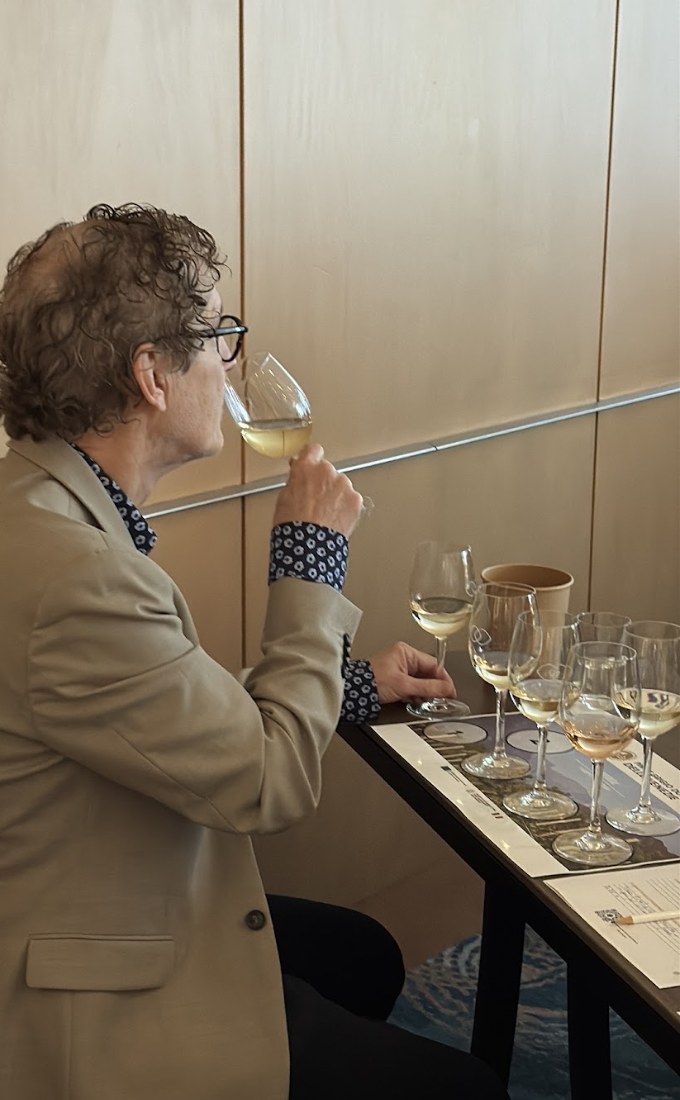
At our Masterclass in Montreal this fall, Karyne Duplessis Piché walked trade and media guests through a structured tasting of Pinot Grigio DOC Delle Venezie. You don’t need a sommelier certification to taste this way at home — just a glass, a bit of attention, and this simple three-step framework.
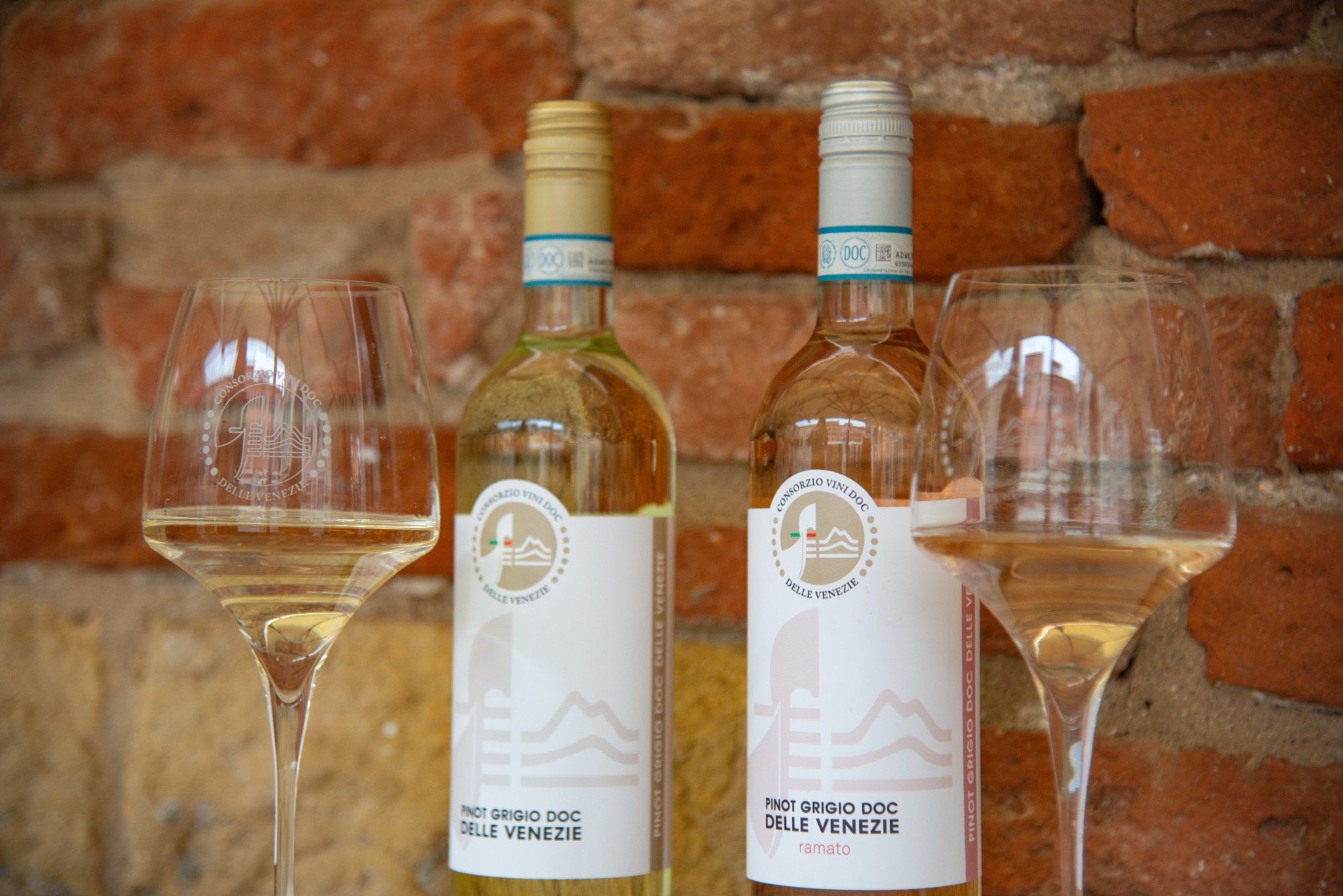
Tilt the glass against a white background. Classic Pinot Grigio Delle Venezie shows high visual appeal: a light golden yellow with golden reflections, grown from loose, well-draining soils such as gravel. The denomination’s Ramato style is the exception: its brief skin contact — drawing on the grape’s naturally grey-pink skins — produces a distinctive copper hue, unlike anything else in the Pinot Grigio family.
Give the glass a gentle swirl and take a few short sniffs rather than one long inhale. Expect strong aromatic intensity with well-balanced fruity and floral notes — citrus, apple, pear and tropical fruit add warmth, with only subtle vegetal notes underneath. Ramato adds a layer of spice and dried fruit from its extra skin contact.
Take a small sip and let it coat your whole mouth before swallowing. Note the acidity first — it’s the backbone of the wine, enhancing freshness and supporting a balanced, full-bodied, elegant structure. Then look for the acid-saline balance that gives the wine its long, pleasant aftertaste, and notice how the finish shifts by region: clean and saline in Veneto’s coastal examples, more mineral and structured from Friuli’s stony soils, brighter and more vertical from the Autonomous Province of Trento’s altitude.
Tasted this way, region by region, the same grape starts to read like three different stories — which is exactly the point.
The bright acidity tasters pick up across Delle Venezie Pinot Grigio isn’t a stylistic choice so much as a climatic signature. The Alpine chain to the north produces a cool, often windy climate that helps the grapes retain acidity through ripening, while large swings between daytime warmth and nighttime cool during the final weeks before harvest help preserve the aromatic compounds responsible for the wine’s characteristic lift on the nose. Average growing-season temperatures across the denomination run from a cool 0–12°C baseline up to 13–14°C, with plenty of room for that day-night swing to do its work.
The minerally edge many tasters notice, particularly in wines from Friuli’s Magredi or the stonier reaches of Trentino, traces back to soils formed from centuries of calcareous gravel and sand deposited by the region’s rivers. Those free-draining soils rarely let vines sit in excess water, concentrating flavor rather than diluting it — one more reason a careful taster can often guess at a wine’s sub-region before ever seeing the label.
@dellevenezie
#PinotGrigioDOCDelleVenezie #DOCDelleVenezie