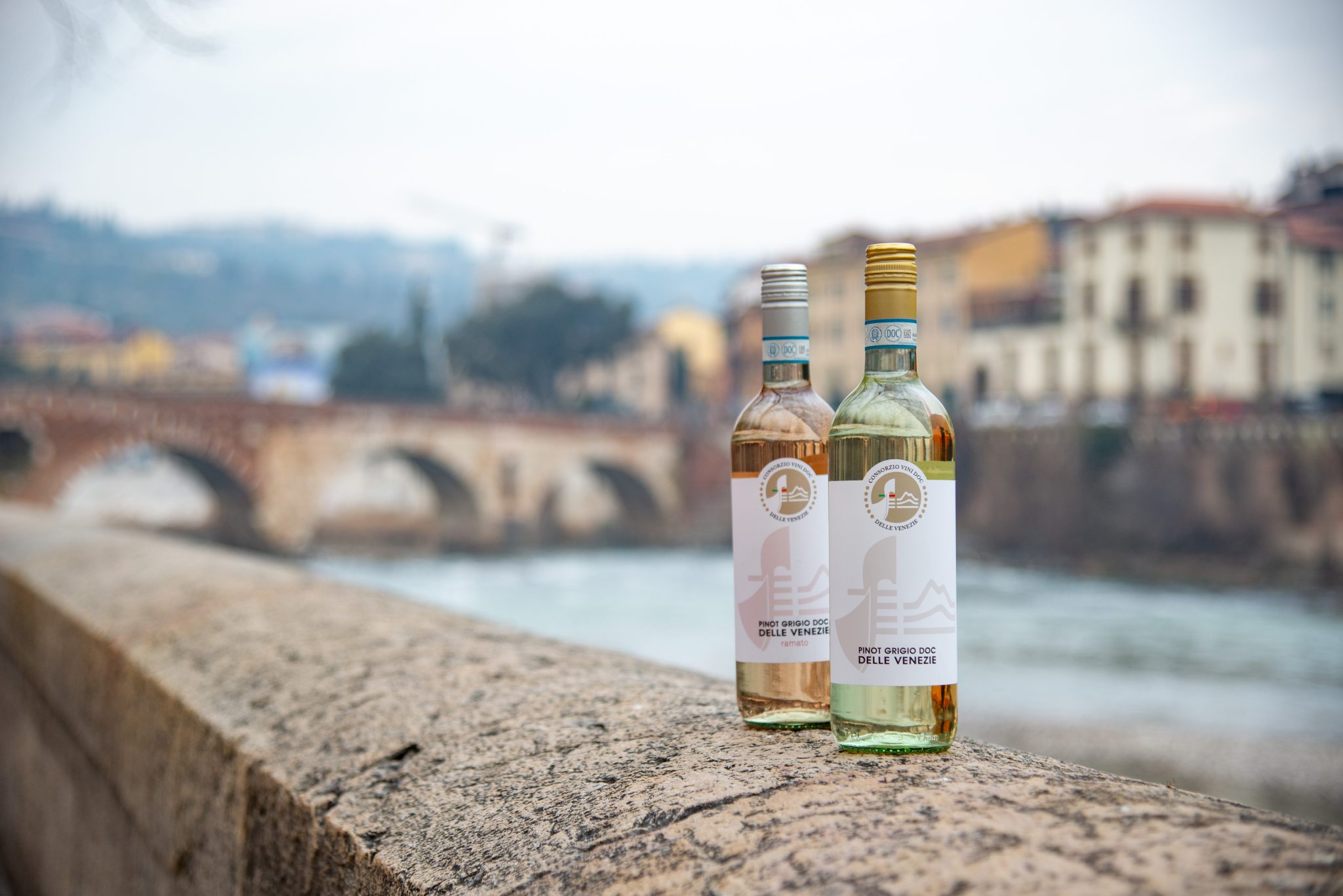
Pour a glass of Ramato next to a rosé and a classic Pinot Grigio, and it becomes obvious within seconds: this wine belongs in a category of its own. It’s not a blend, and it’s not a marketing gimmick — it’s Pinot Grigio DOC Delle Venezie in one of its oldest, most traditional forms, promoted and protected by the DOC itself as a genuine expression of the variety.
Pinot Grigio is a natural mutation of Pinot Noir, and its berries develop a distinctive greyish-pink skin as they ripen, ranging from pink and copper to bluish-grey — which is, in fact, where the name “Grigio” comes from. In the classic style, those skins are pressed away quickly, leaving a pale golden wine. Ramato takes a different approach: the grey-pink skins stay in brief contact with the juice, producing its signature copper hue.
That skin contact does more than add colour. Ramato combines strong visual appeal with layered floral and fruity aromatics, and a more structured palate that balances freshness and fragrance with marked acidity — a fuller mouthfeel than a classic Pinot Grigio, with a touch of tannic grip.
As the trendiness of rosé and orange wine has grown, Ramato is sometimes lumped in with either category. The disciplinare itself allows for “rosato”, “ramato” and “rosé” on the label — but Ramato remains a genuine, historic expression of Pinot Grigio DOC Delle Venezie’s own varietal identity, and tasting one is the fastest way to understand just how much range this single grape variety really has.
Ramato isn’t a modern novelty — it’s closer to how Pinot Grigio was traditionally made across the Triveneto before stainless-steel vinification became the regional default. Letting the grape’s naturally grey-pink skins macerate briefly with the juice produces the style’s signature copper-amber hue and extra texture, a technique winemakers here are increasingly revisiting as a way of showing off a more traditional, skin-contact side of the grape.
What keeps Ramato from feeling heavy is the same cool-climate acidity found throughout Delle Venezie: the Alpine chain’s influence on the territory’s climate, combined with well-drained gravel and sand soils, means even a wine with this much extra texture and tannic grip still finishes bright rather than flat. It’s arguably the clearest proof that Delle Venezie’s terroir, not just its grape, is what defines the wines.
@dellevenezie
#PinotGrigioDOCDelleVenezie #DOCDelleVenezie